
EPDM Rubber Granules Specifications, Sizes, Colors & Applications
A technical selection guide for importers, contractors, distributors, designers and project owners specifying colored EPDM granules for wet-pour playground flooring, running tracks and recreational sports surfaces.
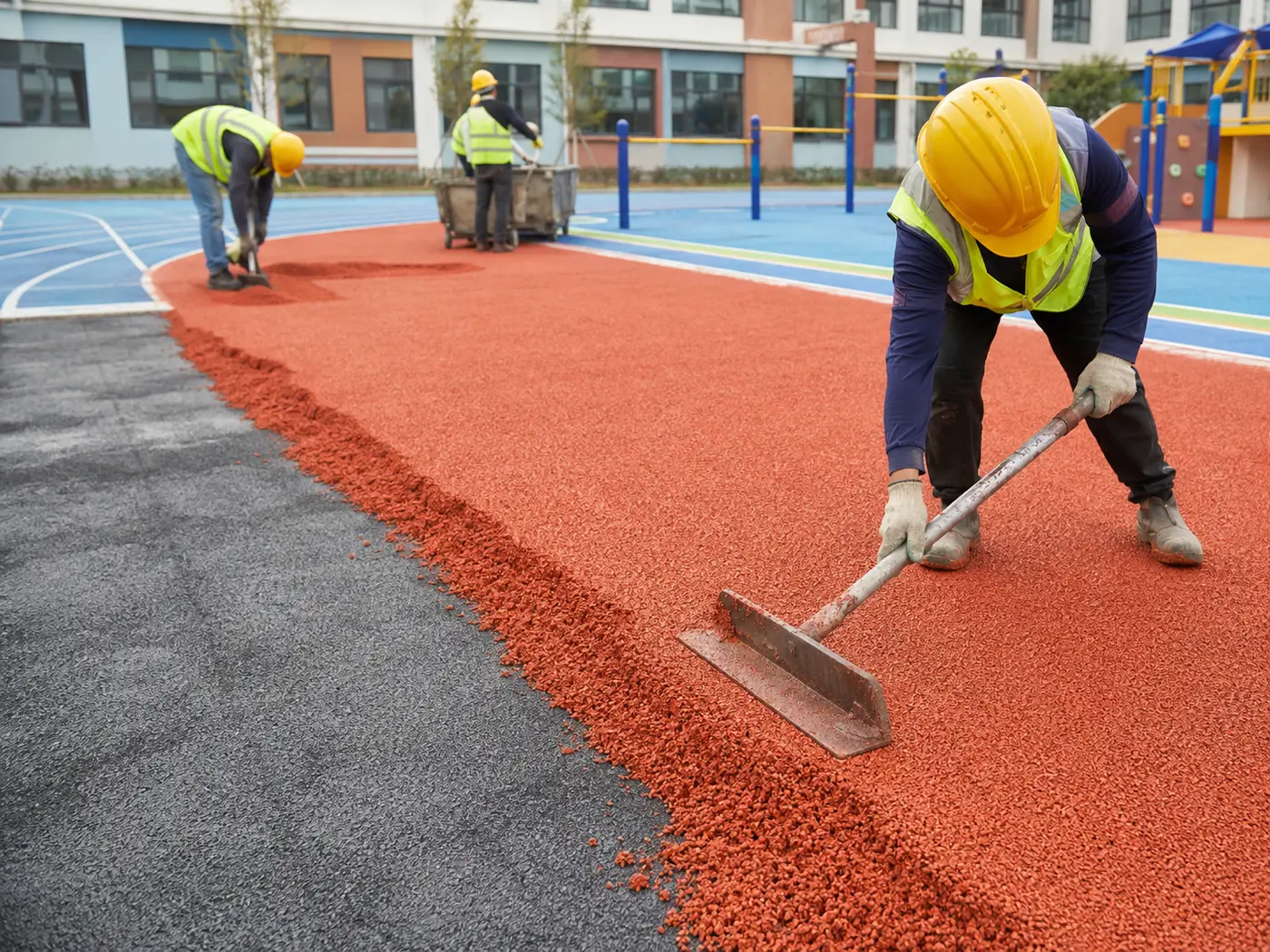
How to choose EPDM granules without relying on color or price alone
EPDM rubber granules should not be selected simply by choosing a color from a photograph and requesting the cheapest price per ton. Application, layer function, particle grading, finished texture, color schedule, binder compatibility, climate, packing and project evidence all affect whether the offered material suits the intended system.
For international procurement, the technical requirement should be settled before the commercial comparison. Buyers still evaluating sourcing and export preparation can use the EPDM Granules Supplier & Export guide. Buyers who already know the product, grading, colors and quantity can continue to the EPDM Granules Price Per Ton & Landed Cost guide.
What are EPDM rubber granules?
EPDM is an abbreviation for ethylene propylene diene monomer. In sports and playground surfacing, the commercial term commonly refers to manufactured colored rubber particles intended for use within a bonded flooring system.
EPDM is often selected for the visible surface because it allows a broad color palette, seamless patterns, borders, play graphics and zoning. The exposed granules are nevertheless only one component: substrate, drainage, resilient base, binder, thickness, workmanship and curing conditions also influence the completed system.
Do not assume every listing called “rubber granules” is equivalent. It may refer to colored EPDM, black recycled SBR, another elastomer, infill or material intended for another industrial process.
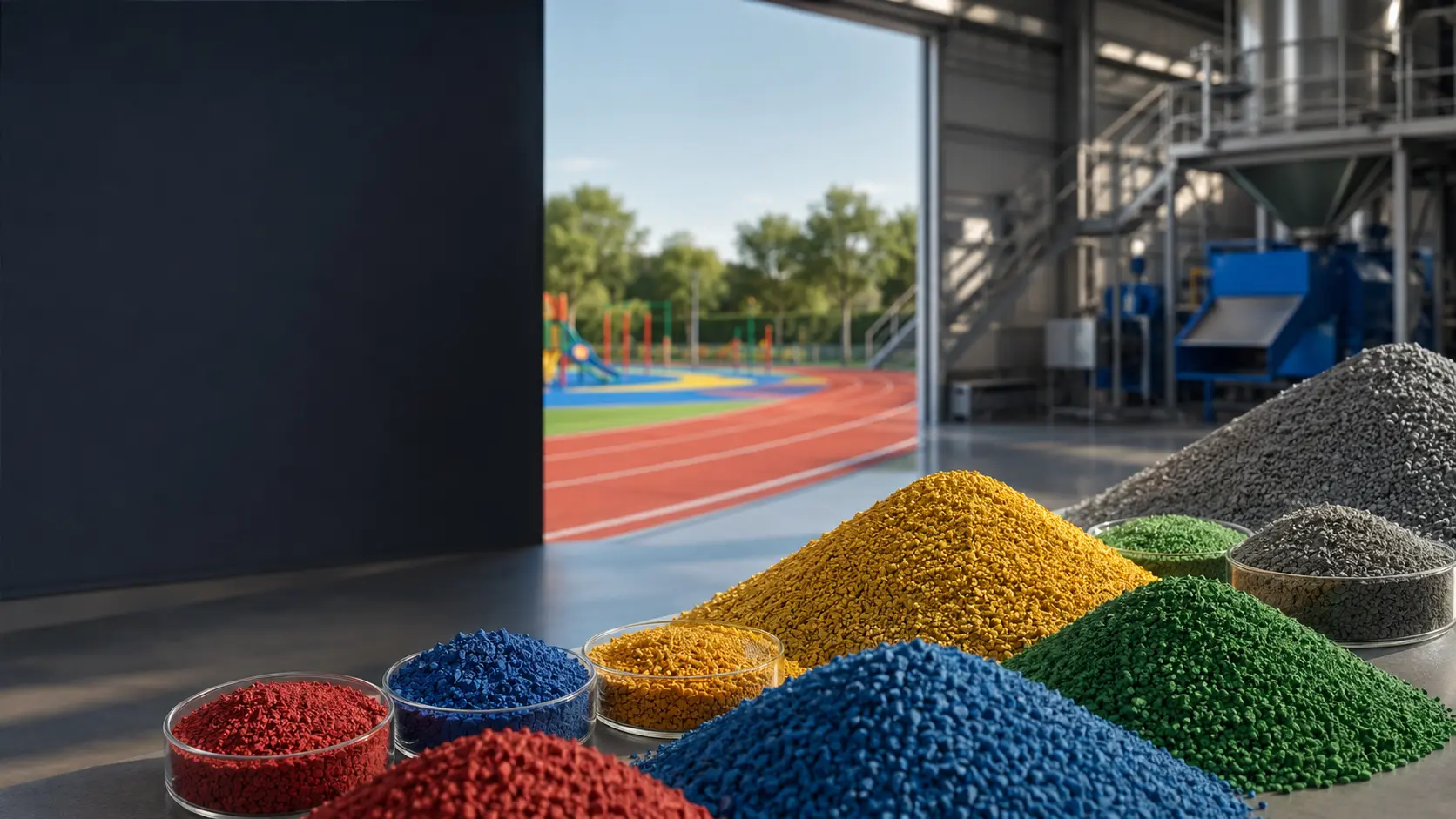
Where colored EPDM granules are used
Playground safety surfacing
Wet-pour playground systems often use colored EPDM in the exposed upper layer above a resilient base. Complete thickness and impact requirements belong to the approved playground system rather than to the granules alone.
Running tracks & athletic zones
EPDM can form part of selected athletic and polyurethane systems. Grading, layer arrangement and performance should follow the approved sports-surface design.
Recreational pathways
Jogging paths, parks and leisure areas can use colored bonded rubber for continuous visual routes. Drainage, slopes, edges and expected traffic need coordination.
Schools & nurseries
Color can support games, numbers, maps and learning graphics. Complex layouts require accurate color take-offs and controlled installation sequencing.
Pool surrounds & leisure zones
Where a rubber system is proposed near water, evaluate drainage, slip conditions, cleaning, moisture, edge restraint and the substrate for the specific project.
Landscape surfaces
Blends, borders and organic forms can integrate rubber flooring with landscape design while retaining the need for a stable base and technically controlled installation.
How EPDM works within a rubber flooring build-up
Prepared substrate
Stability, levels, falls, drainage and surface condition need approval before the rubber layers are installed.
Resilient lower layer
Many systems use an SBR-based resilient layer beneath the colored finish. Its thickness and construction follow the required system performance.
Colored EPDM top layer
The upper layer provides visible color and texture. Grading, thickness and consumption should match the approved method.
Compatible PU binder
Binder compatibility, mixing, storage, working time and weather limitations should follow the responsible system recommendation.
Installation controls
Batching, mixing, tools, joins, color transitions and curing protection influence the finished result.
Inspection & handover
Agree substrate acceptance, material verification, trial areas, layer checks, appearance and required tests before installation begins.
EPDM granule sizes and why grading matters
Granule size describes a particle range rather than one identical dimension. Grading affects surface texture, packing behavior, binder contact, spreading and the appearance of the completed surface.
Photography cannot verify grading. Buyers should request the declared range in the quotation and technical information, together with a labeled physical sample where appropriate.
Broad or inconsistent grading and excessive fines can produce different handling or visual results. Acceptance limits should come from the project or approved product requirements rather than being invented after delivery.
| Selection question | Why it matters | Evidence |
|---|---|---|
| Declared particle range? | Defines the product and expected texture. | Quotation, technical data and sample. |
| Suitable for the system role? | One grading may not suit every layer or installation method. | System recommendation or designer approval. |
| Fines and contamination controlled? | Dust and foreign material can affect mixing and consistency. | Quality information and receiving inspection. |
| Repeat batches coordinated? | Phased projects need consistent grading and appearance. | Batch plan, retained samples and traceability. |
Choosing EPDM colors, blends and graphic zones
Single-color surfaces
A uniform shade simplifies take-off but still requires an approved physical reference and sensible batch coordination.
Mixed-color blends
Define blend percentages or mixing instructions. Separate colors without a controlled ratio can produce visible variation between batches or workdays.
Graphics & borders
Logos, numbers, lanes and small color zones require detailed take-offs because waste and workmanship differ from large uniform areas.
Build a color schedule showing reference, area, layer requirement, estimated consumption, net order quantity, blend percentage where applicable and package labeling. Screen images should not be the final approval standard; use a coded physical sample and, where appearance is critical, a representative cured mock-up.
Estimating EPDM granule consumption per square metre
There is no responsible universal kilograms-per-square-metre figure for every EPDM system. Area alone is insufficient: layer thickness, grading, system consumption basis, details, waste, graphics and site conditions influence the take-off.
EPDM granules vs SBR granules
| Comparison | EPDM granules | SBR granules |
|---|---|---|
| Common system role | Colored exposed layer providing the visible finish. | Resilient lower layer in many wet-pour constructions. |
| Visual function | Color, blends, graphics, zoning and texture. | Normally concealed below the colored surface. |
| Procurement focus | Shade, grading, batch consistency and exposed-use suitability. | Size, base-layer role, cleanliness, source and system compatibility. |
| Approval | Physical sample, technical information and application evidence. | Base-layer specification, grading and system evidence. |
The useful question is not simply “EPDM or SBR?” In a layered construction, identify which material belongs in each layer, at what thickness, with which binder and under which required performance.
What to check before approving EPDM granules
Product identification
Match the commercial product, material description, intended use and relevant identifiers across quotation, technical sheet, sample and packing.
Technical data
Compare the declared grading and relevant characteristics with the actual project requirement. Missing information should remain a clarification, not assumed compliance.
Safety documentation
Make applicable handling and safety information available to logistics and site teams before material arrival.
Test evidence
If the project requires a test, confirm that the evidence relates to the offered material and relevant construction, including dates, sample description and limitations.
Color approval
Use a coded physical reference and retain the approved sample or mock-up record for receiving and installation checks.
System compatibility
Confirm the proposed binder and system relationship rather than assuming compatibility from generic product descriptions.
Protecting EPDM granules during export and site handling
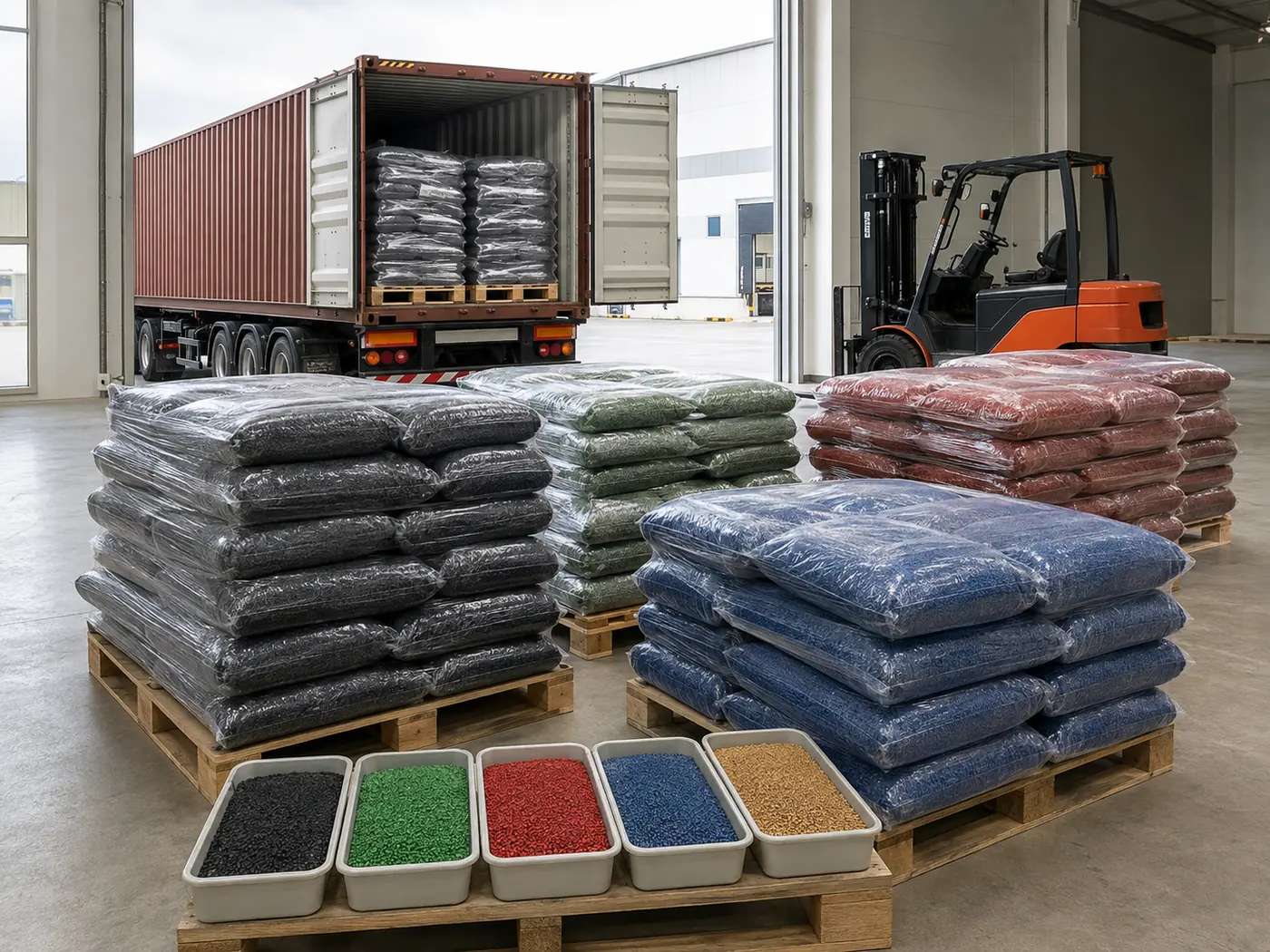
Export packing is part of quality control because damaged, wet, mixed or poorly labeled material can disrupt installation. The quotation should identify net bag weight, packing format, pallet arrangement where used, gross shipment information and loading assumptions.
Every color should be identifiable without opening multiple bags. Labels should coordinate with the color schedule and commercial documents. Store material dry, protected and organized according to supplier guidance, with shades and batches separated.
For commercial costing of bags, pallets, freight and landed cost, continue to the EPDM Granules Price Per Ton guide.
Where EPDM granules sit within Al‑Shiekh Group
EPDM granules form part of the rubber flooring and sports-surface activity within Al‑Shiekh Group. The technical buying path connects raw and system materials with the wider flooring and sports project categories rather than treating EPDM as an isolated product.
Al‑Shiekh Trade & Export coordinates international enquiries, quantities, packing, destination requirements and export communication. Projects requiring complete rubber systems can continue through Rubber Flooring; court and wider sports-surface requirements connect to Sports Flooring & Padel; and buyers comparing alternative court or running surfaces can review Acrylic & Tartan Flooring.
Destination-specific technical planning
Middle East & Gulf
Outdoor exposure, storage and installation timing require project-specific coordination. Consultants may also request samples, technical data and defined submittals.
African projects
Long inland routes and phased construction increase the importance of robust packing, batch planning, spare quantities and protected storage.
Europe & long-haul markets
Import, chemical, labeling, testing and language requirements should be checked for the actual destination and offered material rather than assumed from another market.
What an EPDM granules specification should contain
Manufacturer-side EPDM information
For additional manufacturer-side product information, visit Sport Floor. No Sport Floor telephone or WhatsApp number is used on this page. Project requirements, specifications and current commercial details should be confirmed for the exact material and application.
EPDM granules, installation and export preparation
Continue through the EPDM and sports-flooring network
EPDM rubber granules frequently asked questions
What are EPDM rubber granules used for?
They are commonly used as a colored exposed component in wet-pour playground flooring, recreational surfaces and selected athletic or polyurethane sports systems.
Are EPDM granules the same as SBR?
No. They are different materials and commonly perform different roles in layered rubber flooring systems.
What EPDM granule size should I choose?
Use the grading required by the approved system, intended texture and installation method, supported by technical information and a labeled sample where appropriate.
How many kilograms of EPDM are needed per square metre?
There is no universal figure. Quantity depends on area, layer thickness, verified system consumption, grading, details and waste.
What is the correct EPDM-to-binder ratio?
The appropriate ratio depends on the offered granules, compatible binder, system and conditions. Follow the responsible technical recommendation.
Can EPDM be used for running tracks?
EPDM is used in selected athletic and polyurethane systems. The approved track or sports system should define material, grading, layers and performance.
How should colors be approved?
Use a coded physical sample and, where appearance is critical, a cured trial or mock-up using the proposed materials.
Does an EPDM quotation include PU binder?
Only when explicitly stated. Granules and binder should otherwise be treated as separate quantities and commercial lines.
Request EPDM technical and export coordination
Send the application, drawings, grading, color schedule, net quantity, packing, destination and desired delivery basis to Al‑Shiekh Trade & Export.