
EPDM Granules Price Per Ton & Kg: Export and Landed Cost Guide
Understand why EPDM quotations differ, how to compare price per metric ton and kilogram, and how EXW, FOB, CFR, CIF, freight, import charges and complete flooring-system costs change the real project budget.
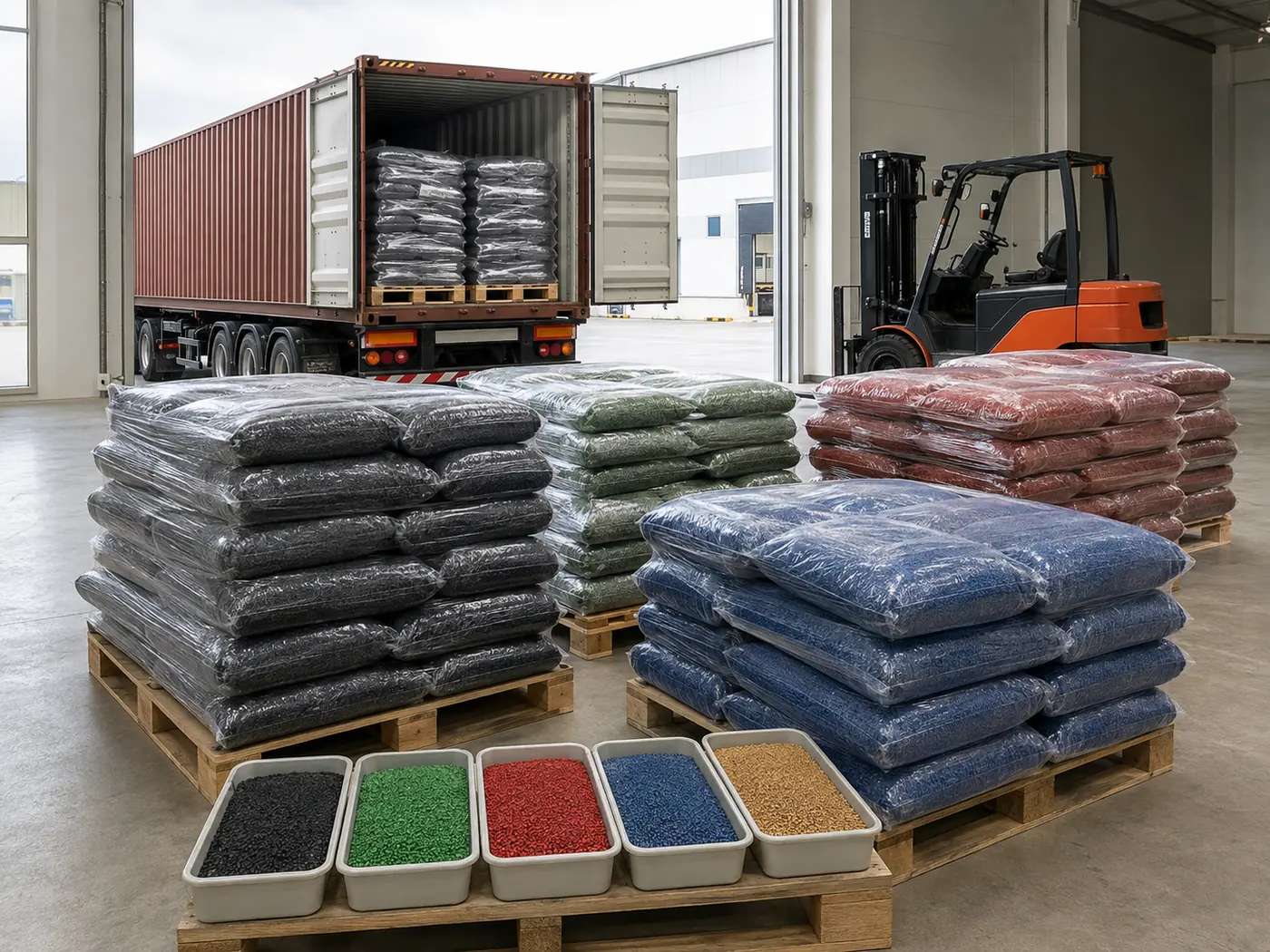
There is no single global EPDM granules price per ton
A valid EPDM granules price is a dated quotation for an identified product, quantity, packing method, delivery term and destination. A number without those details is only an indication and should not be compared directly with another offer.
Search results can mix raw EPDM polymer, recycled rubber, colored EPDM granules, bag prices and complete installed square-metre systems. Commercial scope can also differ: one seller may quote ex-factory while another includes export handling or ocean freight.
This guide therefore focuses on the price and cost intent. Buyers who are still choosing the material, samples or export route should first read our EPDM Granules Supplier & Export guide. For particle ranges, colors and applications, use the EPDM Granules Specifications, Sizes, Colors & Uses guide.
What determines colored EPDM granules price?
Material specification
The term EPDM does not automatically describe one identical commercial product. Formulation, additives, pigment system, production route and project requirements can differ. Compare only offers that describe the same required material basis.
Particle size & grading
Granulation influences texture, installation behavior and availability. The quoted range should match the approved sample, order description and technical information.
Color selection
Standard shades, custom matches and multi-color orders can have different production economics. A color schedule should show net tons per shade.
Order quantity
Samples, partial pallets and container-scale orders do not share the same handling economics. Quote the realistic purchasing quantity rather than an artificial volume.
Packing & palletization
Bag weight, labels, pallets, wrapping and container utilization affect handling and freight. Request both net product weight and approximate gross shipment information.
Production & delivery timing
Urgency can change production planning and shipping options. Separate factory lead time from booking, transit, customs clearance and inland delivery.
Price per metric ton versus price per kilogram
A metric ton equals 1,000 kilograms. Unit conversion is simple only when the specification, currency, net weight and delivery basis are unchanged.
Price per metric ton = price per kg × 1,000
Do not confuse a metric ton with a US short ton or imperial long ton. Also distinguish net product weight from gross shipment weight. Freight capacity may use gross weight while the material unit price is generally based on the stated net quantity.

How EXW, FOB, CFR and CIF change the visible price
| Basis | What the visible amount represents | Buyer should confirm |
|---|---|---|
| EXW | Goods made available at the named premises under the agreed rule; later origin and transport costs may remain outside. | Loading, export clearance, factory location and origin charges. |
| FOB | Sea/inland-waterway basis carrying the agreed scope to loading on board at the named port. | Named port, terminal/document charges and freight booking responsibility. |
| CFR | Main carriage is arranged to the named destination port; insurance and risk responsibilities need separate review. | Destination port, carrier basis and excluded destination charges. |
| CIF | Freight and specified insurance are arranged to the named destination port under the agreed rule. | Insurance scope, customs, duty, local port charges and inland delivery. |
An Incoterm is not a complete sales contract. Product quality, payment, inspection, ownership and dispute provisions need their own written terms. Compare quotations only after converting them to the same commercial boundary.
How to calculate EPDM granules landed cost
Landed cost is the cost of bringing the confirmed material to a defined destination. The components vary by transaction and country, so the calculation should show each assumption separately.
Customs classification, duty and tax treatment should be verified locally for the actual shipment. Record the date and currency of each quotation. Freight and exchange-rate assumptions can change independently of the factory material price.
Container utilization
Packing, payload, pallet layout and legal transport limits affect freight cost per net ton. Ask for a loading plan rather than assuming maximum theoretical weight.
Port & delay costs
Storage, demurrage, detention, examination and slow clearance can change the economics of an apparently inexpensive shipment.
Currency & payment
Exchange rates, transfer fees, finance cost and payment terms should be visible when competing quotations are normalized.
Compare EPDM quotations line by line
Record supplier, quotation date, product identity, particle range, colors, net tons, bag size, pallets, gross weight, Incoterm, named place, currency, unit price, total value, validity, production lead time, payment terms and document set.
Mark unknown items as clarification required. Do not assume pallets, export documents or custom-color charges are included. Review technical suitability separately from price: an offer that does not meet the approved requirement is not a saving.
Lead time should also have a defined trigger—such as payment, purchase order or sample approval—rather than a vague statement such as “two weeks delivery.”
From EPDM granules price to installed flooring cost
Other materials
The complete system may include a resilient base, compatible polyurethane binder, primer, edge details, line marking and repair materials.
Construction inputs
Substrate preparation, drainage, labor, mixers, tools, supervision, waste, protection and curing all belong to the installed-system budget.
Lifecycle inputs
Maintenance, inspection, repairs, downtime and future resurfacing influence long-term value beyond the initial material purchase.
EPDM granules belong to the broader Rubber Flooring activity within Al‑Shiekh Group. Projects that extend into complete courts and sports surfaces can continue to Sports Flooring & Padel. For hard-court and running-surface alternatives, compare the Acrylic & Tartan Flooring section.
How this EPDM pricing guide fits within Al-Shiekh Group
EPDM granules are part of the rubber flooring and sports-surface sector within Al‑Shiekh Group. The website organizes the buying journey through connected specialist sections: rubber flooring covers rubber-based materials and resilient surfaces, while the sports-flooring section connects those materials to playgrounds, running areas, courts and other sports applications.
Al‑Shiekh Trade & Export coordinates international commercial enquiries, quantities, packing, destination requirements and export communication. This allows an international buyer to move from raw-material costing to the relevant complete flooring or sports-surface category when the project requires more than EPDM granules alone.
Why destination changes EPDM granules cost
There is no single delivered global price. Carrier routes, port handling, customs procedures, local taxes, inland distance and currency conditions differ by destination. Even two ports in one country can create different landed costs.
Gulf & Middle East
Confirm the actual port, site program, document requirements and local handling for the project rather than using a regional freight assumption.
African markets
Port choice, sailing frequency, customs procedures and inland movement can dominate landed cost, especially for landlocked destinations.
Europe & long-haul markets
Product documentation, import treatment, long routes, transshipment and inland trucking should be verified for the actual buyer and destination.
Information needed for an accurate EPDM price
Describe the application
Playground, running track, jogging path, landscape surface or another system; attach specification or BOQ where available.
Define the product
Particle range, required characteristics, colors, blend ratios and sample or approval requirements.
Split the quantity
Show net metric tons per color and the total order rather than providing only a combined figure.
Name packing and destination
Bag preference, pallets, labels, destination port, final city and unloading constraints.
Select quotation basis
Request the intended Incoterm with a named place or port so commercial scope is explicit.
List documents and timing
State required documents, inspection needs, target date, payment preference and quotation-validity requirement.
External manufacturer reference
For additional manufacturer-side information about sports-flooring products, buyers can visit Sport Floor. No Sport Floor telephone or WhatsApp number is displayed or used on this page. Product and price information should be confirmed for the exact specification and order through a current dated quotation.
EPDM granules and export preparation
Continue through the EPDM and sports-flooring network
EPDM granules price frequently asked questions
How much do EPDM granules cost per ton?
There is no single responsible global figure. Current price depends on the exact product, particle size, color, quantity, packing, commercial term, documents and destination.
What is EPDM granules price per kg?
For the same specification and commercial basis, divide a metric-ton price by 1,000. Retail bag prices may include different margins or logistics.
Why do colored EPDM prices differ?
Color, formulation, batch requirements, quantity and production planning can change the commercial basis.
Is a lower EXW price better than a higher CIF price?
Not necessarily. They represent different logistics boundaries. Normalize the missing costs before comparing them.
Does EPDM granules price include PU binder?
Only when the quotation explicitly includes it. Granules and binder are commonly separate commercial lines.
Does price per ton include pallets?
Not automatically. Confirm packing, pallets, wrapping, net weight and gross shipment details in writing.
How should I request the current price?
Send the application, particle size, color split, net tons, packing, destination, requested Incoterm, document requirements and timing.
Request an EPDM granules export quotation
Send your specification, colors, net quantity, packing, destination port and preferred Incoterm to Al‑Shiekh Trade & Export.