Technical selection guide for global buyers

EPDM Rubber Granules Specifications, Sizes, Colors & Applications

A practical specification page for importers, contractors, distributors, designers and project owners selecting colored EPDM granules for wet pour playground flooring, running tracks and recreational sports surfaces.
Define the usePlayground, track or recreation
Confirm the systemTop layer, base and binder
Select attributesGrading, color and packing
Verify evidenceSample, documents and batch
Specification before quotation

How to choose EPDM granules without relying on color or price alone

EPDM rubber granules are not selected responsibly by choosing a color from a photograph and asking for the cheapest price per ton. The application, layer function, particle grading, finished texture, color schedule, binder compatibility, climate, packaging and project evidence all influence whether an offered material is suitable.

This guide is written for international procurement. It explains the questions that should be resolved before an importer or contractor approves a sample, compares technical data or requests a commercial shipment. It does not replace the project designer, system supplier, installer, testing laboratory or local authority. Instead, it gives each party a shared framework for describing the required product accurately.

Buyers at an earlier sourcing stage can first review our internal guide to selecting an EPDM granules supplier for global export. Buyers who already know the product, size, color split and quantity can continue to our internal EPDM granules price per ton and landed-cost guide. This page remains focused on technical selection and application intent.

Quick answer: EPDM granules are colored synthetic rubber particles commonly used as the exposed surface component in wet pour playgrounds, recreational rubber flooring and selected athletic or polyurethane systems. A useful specification identifies the application, system role, grading, color, quantity, compatible binder, required documentation and acceptance process.
Material identity

What are EPDM rubber granules?

EPDM is an abbreviation for ethylene propylene diene monomer. In sports and playground surfacing, the commercial term normally refers to manufactured colored rubber particles intended for use within a bonded flooring system. The granules are combined with a compatible polyurethane binder and installed according to the approved system design.

EPDM is frequently chosen for the visible layer because it offers a broad color palette and enables seamless patterns, borders, routes, play graphics and architectural zoning. The exposed layer affects how the completed surface looks and feels, but it is only one part of the construction. The substrate, drainage, resilient base, binder, thickness, workmanship and curing conditions also influence performance.

Do not treat every listing described as “rubber granules” as the same product. The term may refer to colored EPDM, black recycled SBR, thermoplastic materials, raw polymer, infill or material intended for another industrial process. Confirm the complete product identity and intended system role in writing.
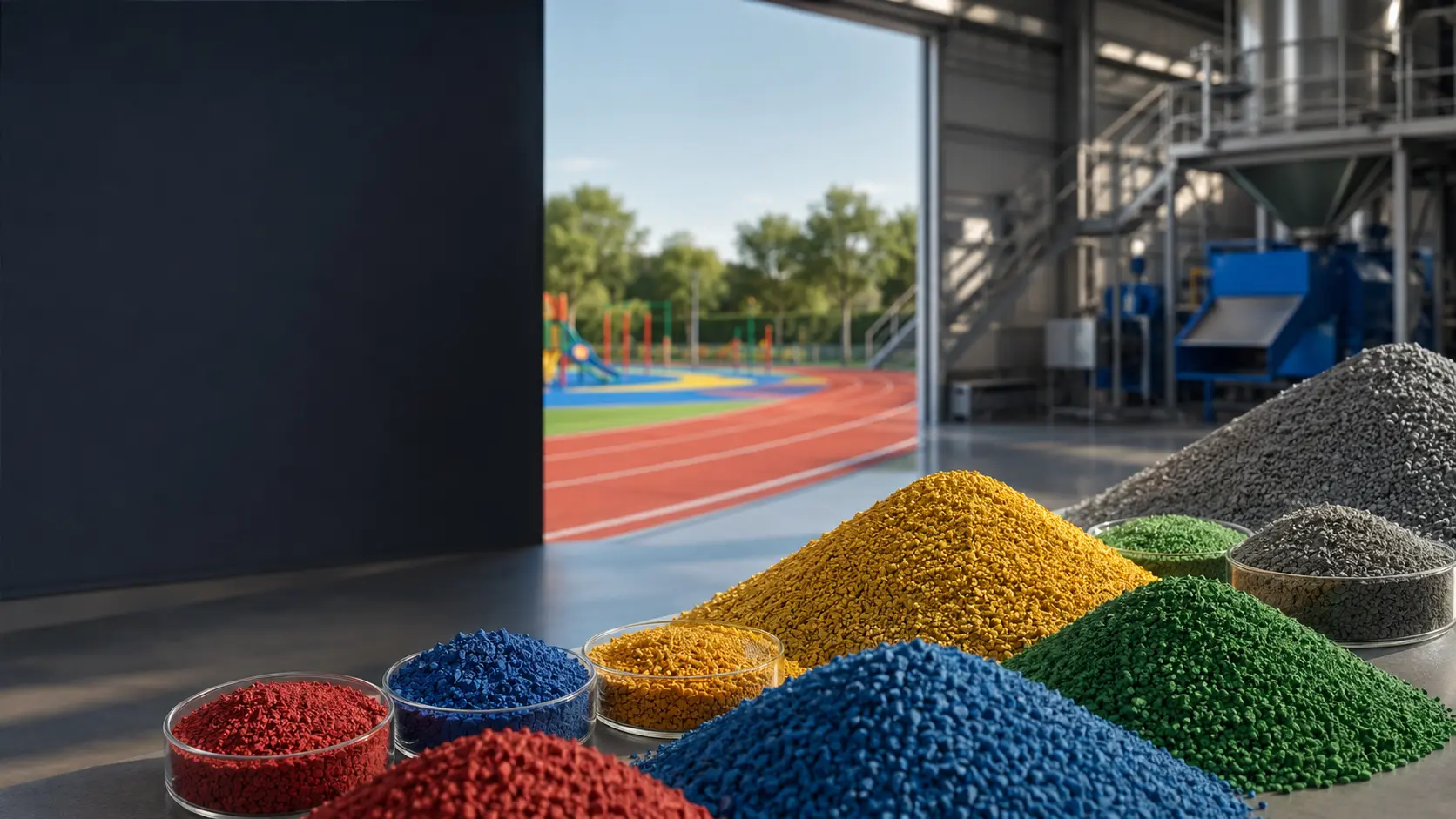
Colored EPDM rubber granules for specification and application selection

Visible finish

The colored granules typically define the upper surface color, granular texture and visual character of wet pour flooring.

System component

Granules must be considered with the binder, lower layer, substrate and installation method rather than as an isolated decorative material.

Procured product

Importers need an agreed grading, color schedule, quantity, packing format, technical documents and batch-control process.

Applications

Where colored EPDM granules are used

Application determines the questions a buyer should ask. The same general material name can appear in projects with very different layer structures, safety objectives, appearance requirements and installation controls.

Playground safety surfacing

Wet pour playgrounds often use EPDM in the colored upper layer above a resilient base. Designers use contrasting colors to separate age groups, circulation routes, equipment zones and themed graphics. The complete system thickness and impact performance should be established for the playground equipment and governing project requirements.

Running tracks and athletic zones

EPDM may form part of selected track, training and polyurethane sports systems. The required grading, layer arrangement and performance cannot be inferred from playground practice. Follow the system designer’s details and confirm whether the material is intended for a broadcast, structural spray, wet pour or another approved construction.

Recreational pathways

Jogging paths, community parks and leisure areas may use colored bonded rubber for visual routes and a continuous surface. Drainage, edge details, slopes, joints, expected traffic and maintenance access should be coordinated before the granule quantity is calculated.

Schools and nurseries

Educational environments use color to support games, numbers, maps, movement cues and learning graphics. A complex design needs a detailed color schedule because every shade and blend must be measured, ordered, stored and installed in a controlled sequence.

Pool surrounds and leisure zones

Where an EPDM-based system is proposed near water, the designer should address slip conditions, drainage, cleaning chemicals, continuous moisture, edge restraint and the substrate. Suitability should be confirmed for the specific environment rather than assumed from a generic outdoor statement.

Decorative landscape surfaces

Architects can use blends, contrasting borders and organic shapes to coordinate rubber flooring with planting, furniture and wayfinding. Visual design does not remove the need for a stable base, appropriate drainage and a technically controlled installation.

Important distinction: a statement that EPDM granules are commonly used in an application is not a certificate that every product or every proposed system meets the project’s safety, athletic or regulatory requirements. Request application-specific documentation and professional approval.
Layer logic

How EPDM works in a wet pour rubber flooring system

Wet pour flooring is created on site by mixing rubber granules with a polyurethane binder, placing the mixture and finishing it into a seamless surface. A common concept includes a prepared substrate, a resilient lower layer and a colored EPDM top layer. However, actual thicknesses, material ratios and performance requirements must come from the approved system and project conditions.

Prepared substrate

The base must have the required stability, level, falls, drainage and surface condition. Concrete, asphalt or other approved constructions may be used depending on the system. Defects below the rubber surface can affect the finished floor.

Resilient lower layer

Many playground systems use black SBR rubber granules with binder below the colored finish. This layer contributes depth and resilience. Its design is linked to the required system performance and should not be selected only by cost.

Colored EPDM top layer

The upper layer provides the visible color and texture. Its thickness, grading and consumption should be confirmed in the approved method. Insufficient material, uneven compaction or poor sequencing may make the appearance inconsistent.

Compatible PU binder

The binder connects the particles after curing. Compatibility, mixing, storage, working time, moisture sensitivity and weather limitations matter. Use the system supplier’s recommendation and installer method rather than applying a universal ratio.

Installation controls

Batching, mixing time, tools, crew movement, joins, edge details, color changes and curing protection influence the result. A technically suitable granule can still perform poorly if the installation process is uncontrolled.

Inspection and handover

Agree the inspection points before work: substrate acceptance, material verification, trial area, layer thickness, appearance, curing and any specified tests. Keep batch and delivery records for traceability.

For factory-level product information and related application pathways, consult the external Sport Floor EPDM granules technical guide. Use it together with the project specification and a written quotation; a web page should not be treated as a substitute for the approved submittal.

Particle grading

EPDM granule sizes and why grading matters

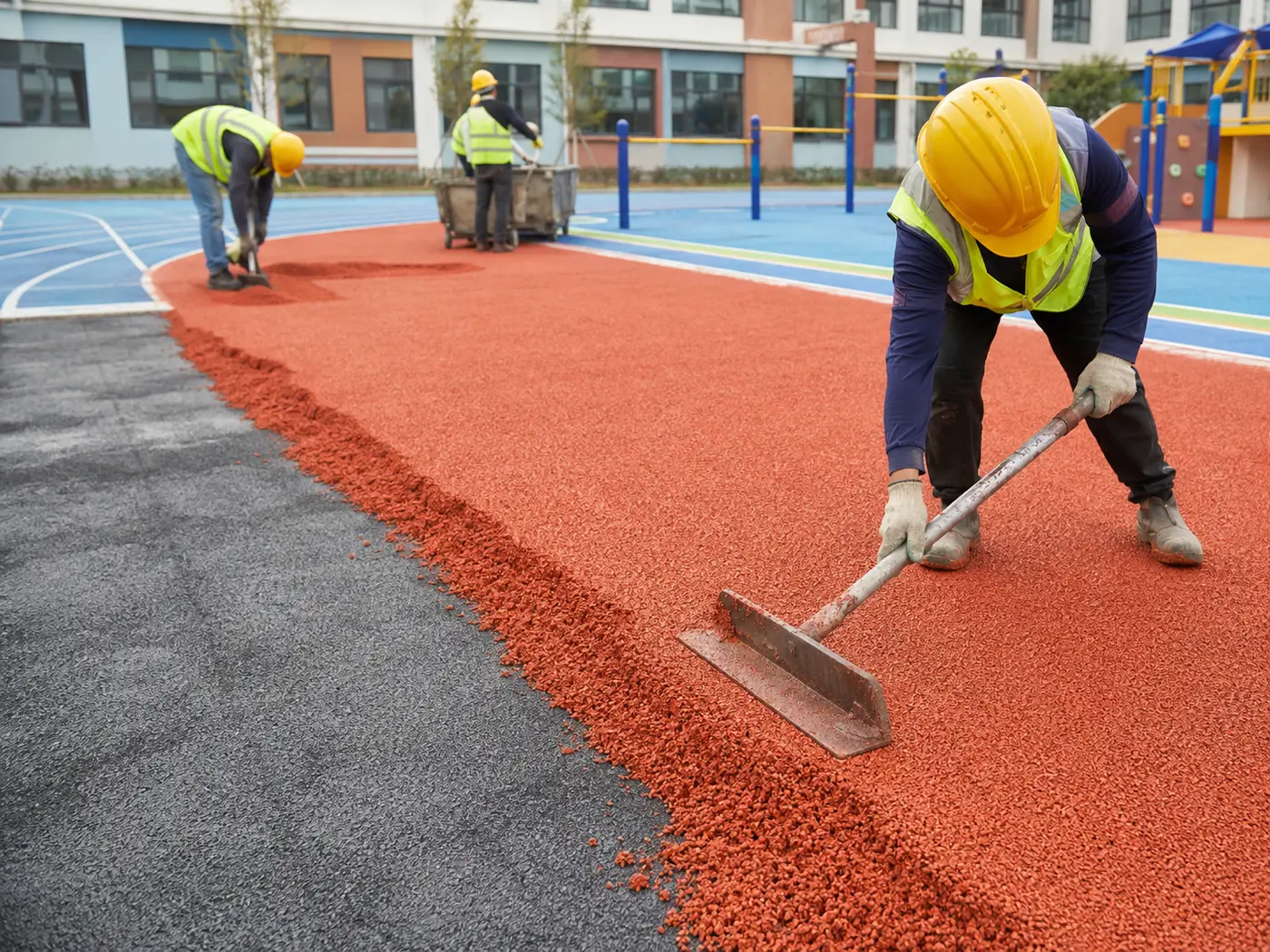
Installation of colored EPDM wet pour sports and playground flooring

Granule size describes a particle range, not a single identical dimension. Grading affects the texture, packing behavior, binder contact, spreading and visual finish of the installed surface. Buyers should therefore compare quotations using the same declared range and the same intended application.

Photography is useful for a first visual impression but cannot verify grading. Perspective, lighting and screen resolution can make particles appear smaller or larger. Request a technical data sheet, a labeled physical sample and—when the project warrants it—a trial panel produced with the proposed binder and installation method.

Very broad or inconsistent grading may create a different texture from a controlled range. Excess fines or dust can also affect handling and mixture behavior. The acceptable limits and test method must be agreed through the project’s technical process rather than invented after delivery.

Selection questionWhy it mattersEvidence to request
What is the declared particle range?It defines the product being compared and influences the expected surface texture.Quotation line, TDS and labeled sample.
Is the range suitable for the system role?A grading used in one layer or method may not suit another construction.System recommendation or designer approval.
How are fines and contamination controlled?Dust and foreign material may affect appearance, mixing and consistency.Supplier quality statement and delivery inspection.
Will repeat batches remain coordinated?Multi-shipment projects need consistent grading and appearance across phases.Batch plan, retained samples and traceability records.
Color planning

Choosing EPDM colors, blends and graphic zones

Color is a technical procurement item as well as a design choice. The approved shade must be converted into measurable quantities, coordinated batches, labeled packing and an installation sequence.

Single-color surfaces

A uniform color may simplify ordering and site control, but batch coordination remains important. Confirm the approved reference under relevant lighting and agree how normal manufacturing variation will be assessed.

Mixed-color blends

A blend requires percentages or a defined mixing instruction. Buying separate colors without a controlled ratio can produce visible variation between mixes, crews or workdays.

Graphics and borders

Logos, animals, numbers, lanes and borders create small color zones with different waste and workmanship needs. Obtain a detailed take-off from the final drawing rather than applying one average allowance to the entire area.

Build a color schedule before placing the order

The schedule should identify the color name or code, approved sample reference, surface area, system thickness, estimated consumption, net order quantity, waste basis, blend percentage where relevant and package labeling. Keep spare material requirements separate so they are visible. When delivery is phased, state which colors are required in each shipment.

Screen colors are not reliable approval samples. Device settings, photography and lighting alter appearance. Review a physical sample and, for visually sensitive work, approve a representative mock-up using the proposed granules, binder and finish. Record the approval date and sample label so purchasing and installation refer to the same decision.

Some colors may behave differently in a project’s visual environment. Light shades can show dirt sooner; intense or dark areas may create different perceived temperatures; adjacent contrasting shades can highlight irregular edges. These are design and maintenance considerations, not reasons to make unsupported performance claims. Coordinate the palette with the architect, owner, installer and maintenance team.

Quantity planning

Estimating EPDM granule consumption per square metre

Searches for “EPDM granules consumption per m²” often expect one universal figure, but responsible quantity planning requires more information. Surface area alone is insufficient. Thickness, grading, density basis, binder addition, compaction, details, waste, graphics and site conditions influence the material take-off.

Planning relationship: net EPDM quantity is derived from approved surface area × specified layer thickness × the verified system consumption basis, then adjusted for details and an agreed waste allowance. Use supplier and installer data for the selected system; do not publish or copy an unsupported universal rate.

Start with net measured area

Separate the areas by system type, thickness and color. Exclude openings accurately and include steps, ramps, upstands or vertical details where they are part of the scope. Irregular shapes should be measured from coordinated drawings. Confirm whether the bill of quantities gives plan area or actual finished area.

Apply the approved layer requirement

The colored layer may not have the same thickness across every application. Playground, athletic and decorative systems can differ. Use the approved section and method statement. If the design is not complete, state that the estimate is provisional and identify the assumed build-up.

Separate granules from binder

Granule weight and polyurethane binder weight are different quantities. A quotation for EPDM alone does not include binder unless it says so explicitly. The binder ratio depends on the selected materials, system and installation conditions; it should be obtained from the responsible technical source.

Allow for real project details

Color changes, small graphics, edges, trial panels, packaging residue, handling loss and repairs can affect the required order. Waste should be reasonable and documented, not a hidden percentage used to cover an uncertain take-off. Ask the installer to review quantities before purchase because a shortage may interrupt work and a later batch may create coordination challenges.

Area schedule split by color and system
Approved thickness for every zone
Verified consumption basis
Binder calculated as a separate item
Trial and detail quantities identified
Waste and spare stock agreed
Technical comparison

EPDM granules vs SBR granules

EPDM and SBR are often discussed together because many wet pour systems use both, but they commonly perform different roles. Treating them as interchangeable solely because both are rubber granules can lead to an incorrect quotation or layer design.

ComparisonEPDM granulesSBR granules
Common system roleColored exposed layer that provides the visible finish.Resilient lower layer in many wet pour constructions.
Visual functionColor selection, blends, graphics, zoning and texture.Normally concealed below the colored surface.
Procurement focusShade, grading, batch consistency, exposed-use suitability and packing.Size, base-layer role, cleanliness, source and system compatibility.
Typical comparison errorCompared with a cheaper generic colored or recycled material without confirming identity.Assumed to be a suitable visible finish or direct technical replacement.
Approval approachPhysical color sample, TDS, application evidence and trial where required.Base-layer specification, grading, system evidence and quality documentation.

The choice is not simply EPDM or SBR. In a layered system, the correct question is what material belongs in each layer, at what thickness, with which binder and under which performance requirement. Follow the approved system rather than substituting one material based on unit price.

Quality review

What to check in an EPDM granules technical submittal

A robust submittal connects the exact offered product to the exact project requirement. Collecting generic documents is not enough if the name, grading, color or intended application does not match the quotation.

Product identification

Check manufacturer or supplier identity, commercial product name, material description, intended use and country of origin where required. The identifiers should remain consistent across the quotation, technical sheet, sample and packing.

Technical data

Review the declared grading and relevant material characteristics. Compare them with the specification clause-by-clause. Mark compliant, deviating or not stated; do not convert missing information into assumed compliance.

Safety documentation

Request the applicable safety data and handling guidance. Storage, personal protection, spill response and disposal information should be available to the logistics and site teams before material arrives.

Test evidence

If standards or tests are required, confirm the report belongs to the offered material and relevant construction. Review laboratory identity, dates, sample description, method, results and limitations. A logo or certificate title alone is insufficient.

Color approval

Use a coded physical sample and define the comparison process. Where the appearance is important, connect the approved sample to a mock-up and retain a protected reference for delivery checks.

Compatibility statement

Confirm the proposed binder and system relationship. Avoid combining materials from separate sources without written technical review, because compatibility cannot be established from generic product descriptions.

Evidence rule: do not claim a certification, standard, UV result, toxicity status, environmental property or service life unless the statement is supported by current documentation for the exact offered product and relevant use.
Sampling and inspection

From color sample to delivered batch

Request a labeled sample

The label should state the supplier, product, grading, color reference and date or batch information available. An anonymous bag of granules cannot support traceable approval.

Review documents together

Compare the physical sample with the quotation and technical sheet. Resolve different names, ranges or descriptions before approval rather than waiting until the purchase order is issued.

Produce a trial when needed

A cured panel reveals texture, blend, binder effect and workmanship more clearly than loose particles. Define who supplies materials, who installs it and what constitutes acceptance.

Retain the approved reference

Protect and label the sample or mock-up record. Site teams need access to the approval reference when deliveries and installed areas are inspected.

Inspect incoming material

Check packaging condition, labels, quantities, color references, batch information and visible contamination. Record damage or discrepancy before material is mixed or distributed.

Maintain traceability

Link delivery records and batch labels to installed zones where project procedures require it. Retain spare material in agreed conditions for repair and comparison.

Packing and storage

Protecting EPDM granules during export and site handling

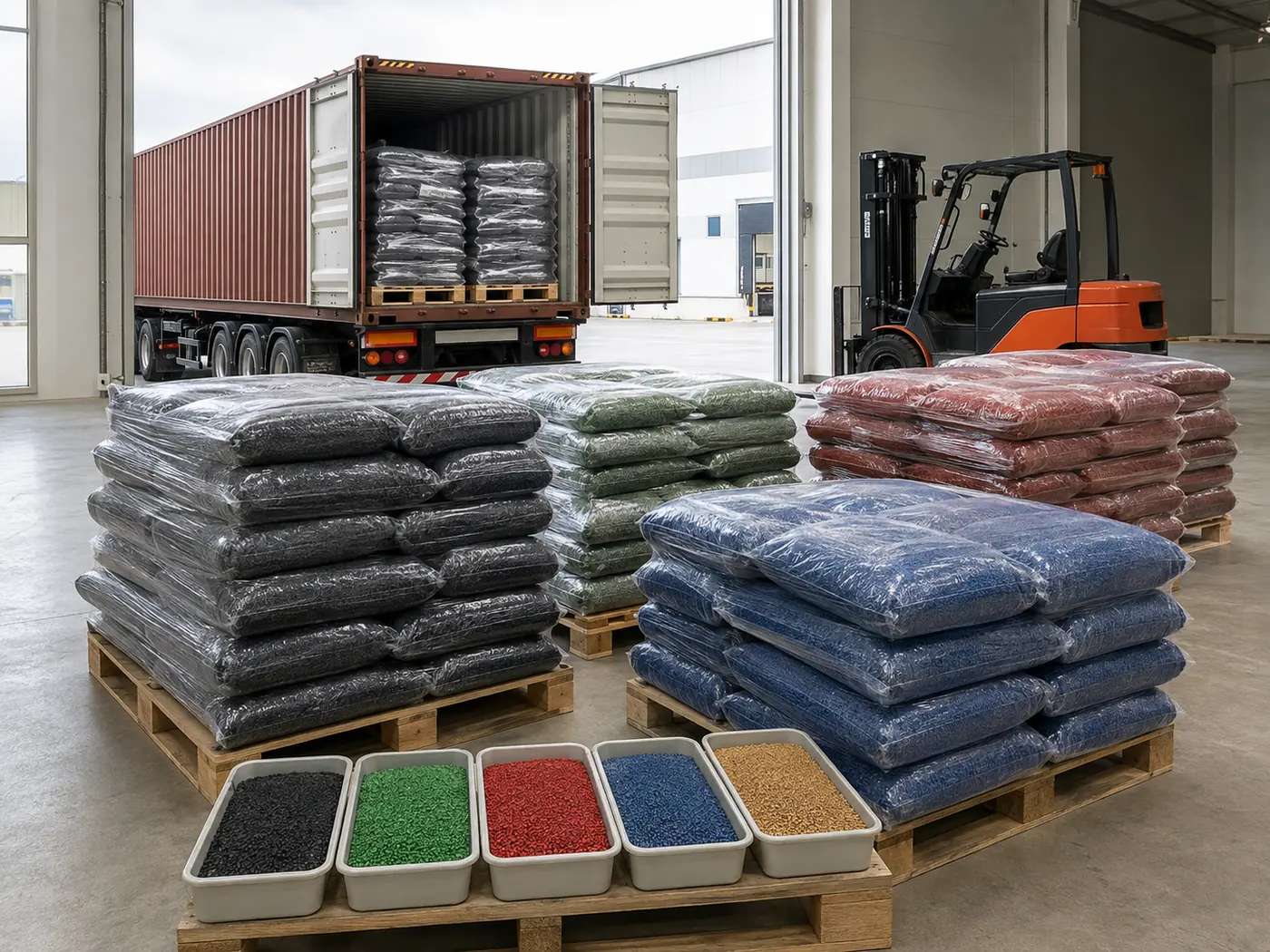
Export packing is part of technical quality because damaged, wet, mixed or poorly labeled material can disrupt installation. The quotation should state net bag weight, bag type, pallet arrangement if used, wrapping, gross shipment weight and container-loading assumptions.

Every color should be identifiable without opening multiple bags. Labels should match the commercial documents and color schedule. For blended surfaces, determine whether colors will arrive separately for controlled site mixing or in another agreed format. The installer must understand the method before delivery.

Store material according to supplier guidance in a dry, protected and organized area. Keep bags off unsuitable surfaces, protect them from damage and separate shades and batches. Apply stock rotation where relevant. Binder may have different storage conditions and sensitivity, so do not assume one rule covers every component.

Before shipment, buyers should confirm destination marking, required language, pallet restrictions, fumigation rules where applicable, documentation and unloading capabilities. For detailed commercial costing—including bags, pallets, freight and landed cost—use our EPDM price per ton and kilogram guide.

EPDM rubber granules export packaging and international shipment preparation
Climate and workmanship

Installation conditions that affect the finished EPDM surface

Material selection and installation quality cannot be separated. Weather, substrate moisture, surface temperature, humidity, wind, rain risk and working time can affect mixing, placement and curing. Use the binder and system manufacturer’s current instructions and the project method statement to define acceptable conditions.

Substrate readiness

Check strength, stability, cleanliness, levels, falls, drainage and any primer requirement. Installing over a defective base can transfer problems into the rubber finish.

Batching and mixing

Measure components with controlled equipment and follow the approved sequence and time. Inconsistent batches can change coating, workability, color appearance and cured texture.

Placement and joins

Plan crew size and work boundaries so material is placed within its working window. Poorly coordinated stops or color transitions may remain visible.

Tools and release agents

Use only approved tools and ancillary materials. An unsuitable release or cleaning product may affect the surface and should not be improvised on site.

Curing protection

Restrict traffic and protect the installation from water, dust, debris and damage for the required period. Handover pressure should not override curing instructions.

Qualified installation

Wet pour finishing depends on crew experience, consistent mixing and coordinated placement. Evaluate installer capability as part of the system, not after material purchase.

The appropriate binder percentage, layer thickness, curing duration and weather window are project-specific. A responsible technical page should explain the decision process without presenting one unsupported recipe as valid for every country and application.

Worldwide procurement

Specifying EPDM granules for different international markets

Global supply does not mean one technical package is automatically accepted everywhere. Import rules, construction specifications, playground requirements, chemical documentation, labeling, customs classification and language expectations vary by destination and may change. The importer should verify current local obligations with qualified parties.

Middle East and Gulf projects

Hot climates and exposed sites make outdoor material selection, binder compatibility, storage and installation timing especially important. Consultants may request project-specific prequalification, samples, technical data and test evidence. Plan shade areas and protected storage before material arrives.

African projects

Long inland routes, limited storage infrastructure and phased construction can make robust packing and batch planning critical. Confirm port and border requirements, spare quantities and whether later shipments can remain coordinated with the first phase.

European projects

Importers may need detailed chemical, environmental, labeling and product documentation. Do not assume that a report prepared for another country or a different system is sufficient. The responsible economic operator and project team should verify the applicable framework.

Asia, the Americas and island destinations

Unit conventions, testing language, transit duration, transshipment and local climatic conditions require destination-specific review. Record all dimensions and quantities in clear units and state whether tons are metric. Coordinate container unloading and protected storage before dispatch.

Global RFQ principle: send the destination with the technical requirement. It allows the factory and export coordinator to consider packing, labeling, documents and shipment planning while the buyer verifies local compliance.
Specification checklist

What an EPDM granules specification should contain

Project and application description
System role and layer identification
Declared granule grading
Color codes and blend percentages
Net quantity by each color
Approved binder relationship
Required TDS and SDS
Specified tests or standards
Physical sample approval
Mock-up requirement if applicable
Bag weight and pallet format
Labels and batch traceability
Incoterm and named destination
Production and delivery program
Storage and handling guidance
Inspection and acceptance process

Avoid specifications that consist only of “EPDM, approved color.” That wording leaves grading, material identity, system role, evidence, packing and acceptance undefined. Equally, avoid copying detailed limits from an unrelated product without understanding why they are required. Every clause should connect to design intent, safety, appearance, constructability or quality control.

Accurate enquiry

How to request EPDM granules for a project

State the application

Describe the playground, wet pour area, running track, sports zone or landscape use. Attach the specification, section and finish schedule where available.

Describe the system role

Confirm whether EPDM is the exposed top layer, part of a polyurethane system or intended for another approved process. Identify the base and binder concept.

List grading and colors

Provide the particle range, shade references, blend percentages, graphic quantities and the physical sample or mock-up process.

Give net quantities

Show metric tons per color, project phases, trial quantities and spare material. If only area is known, provide drawings and thickness for technical review.

Define packing and documents

State bag, pallet, label, TDS, SDS, test and inspection needs. Identify any destination-specific import or language requirement.

Add commercial details

Provide destination port and country, desired Incoterm, target schedule and payment expectations. Keep technical approval distinct from final commercial acceptance.

Copyable RFQ: “Please quote colored EPDM rubber granules for [application and system role]. Required grading: [range]. Colors and net quantity: [schedule]. Proposed binder/system: [details]. Packing and labels: [requirements]. Documents and tests: [list]. Destination: [port, country]. Incoterm: [rule and named place]. Please confirm sample process, production lead time, batch traceability, gross shipment data, validity and exclusions.”

For supplier evaluation, packing and export preparation, refer to our international EPDM supplier guide. For the original manufacturer’s overview of colors, sizes, applications and related factory routes, visit Sport Floor’s EPDM rubber granules page.

Direct technical answers

EPDM rubber granules frequently asked questions

What are EPDM rubber granules used for?

They are commonly used as a colored exposed component in wet pour playground flooring, recreational surfaces, landscape zones and selected running-track or polyurethane sports systems.

Are EPDM granules the same as SBR?

No. They are different materials and commonly have different system roles. EPDM is often selected for the colored upper layer, while SBR is frequently used in a resilient lower layer.

What EPDM granule size should I choose?

Choose the grading required by the approved system, desired texture and installation method. Request a technical sheet and labeled sample, and compare quotations on the same grading basis.

How many kilograms of EPDM are needed per square metre?

There is no universal responsible figure. Quantity depends on area, thickness, verified system consumption, grading, details and waste. Obtain the basis from the approved system supplier and installer.

What is the correct EPDM-to-binder ratio?

The ratio depends on the offered granules, compatible binder, system, application and conditions. Follow the current technical recommendation rather than copying a generic online ratio.

Can EPDM granules be used for playground safety flooring?

They are commonly used in the colored surface layer of wet pour playground systems. Safety performance belongs to the complete tested and installed build-up, not the granules alone.

Can EPDM granules be used for running tracks?

EPDM is used in selected athletic and polyurethane systems. The track designer or approved system should define the material, grading, layers and performance requirements.

How should EPDM colors be approved?

Use a coded physical sample. For sensitive designs, approve a cured trial or mock-up with the proposed binder and finish, then retain the reference for delivery and installation checks.

What documents should an importer request?

Requirements vary, but buyers commonly review a quotation, technical data, safety data, packing information, origin and shipment documents plus any tests specified for the exact project.

Does an EPDM quotation include PU binder?

Only when it is explicitly listed. Granules and binder should appear as separate quantities and commercial lines unless the offer clearly defines a combined package.

How should EPDM granules be stored?

Follow supplier guidance and protect bags from water, contamination, damage and disorganized mixing. Separate colors and batches, preserve labels and manage binder under its own stated conditions.

Where can I check EPDM granules prices?

After confirming the application, grading, colors and quantity, use the internal EPDM price-per-ton guide to prepare a comparable FOB, CIF or landed-cost request.

From specification to shipment

Request EPDM technical and export coordination

Send the application, drawings, required grading, color schedule, net quantity, packing, destination and desired delivery basis. Contact the export coordinator or the main factory through WhatsApp icons without displaying telephone numbers.

Scroll to Top