Global sports flooring materials and export coordination[email protected]
Factory-connected worldwide supply

EPDM Granules Supplier for Global Export and Bulk Orders

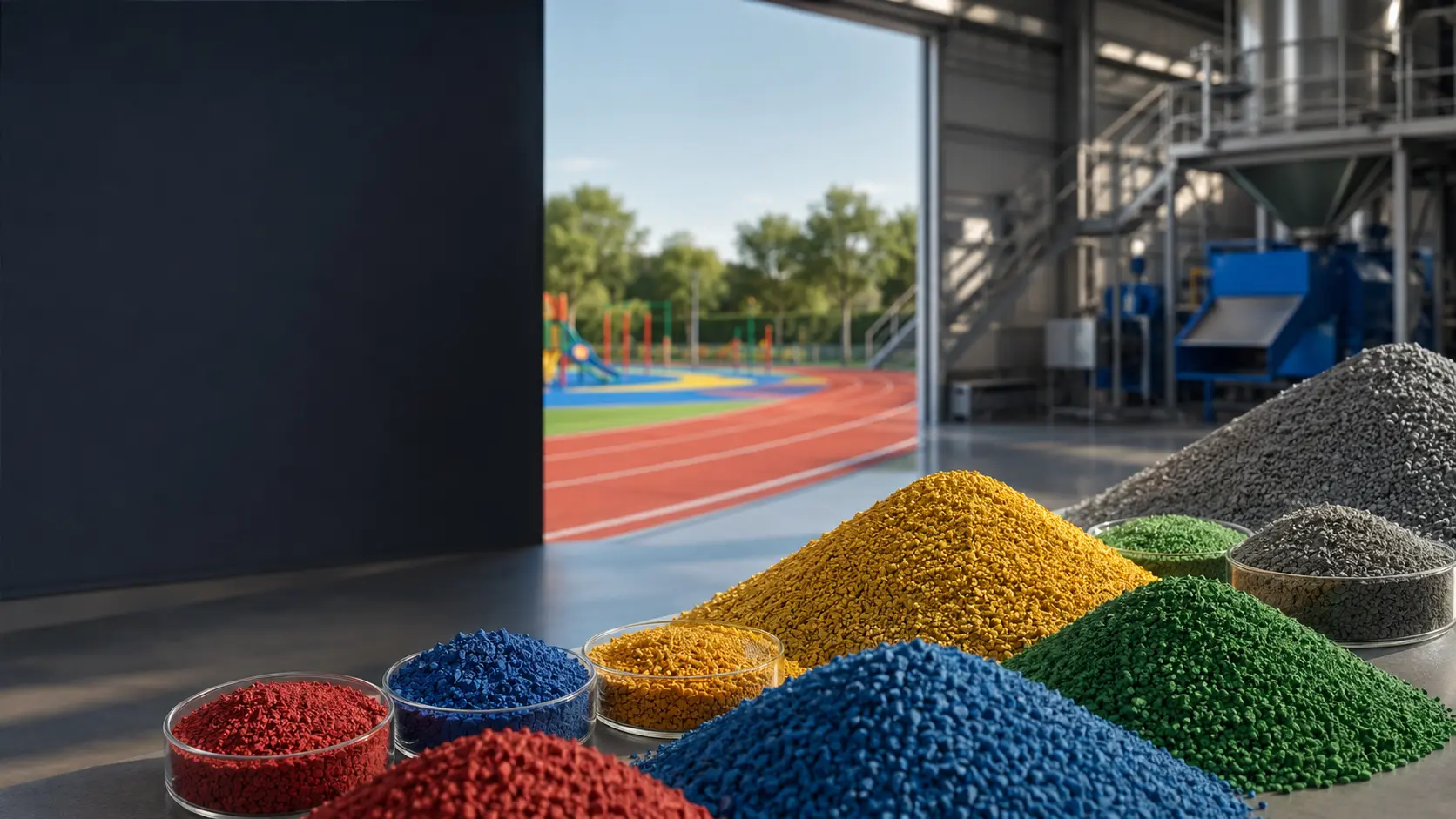
Source colored EPDM rubber granules for playgrounds, running tracks and sports flooring through a clear international procurement route covering specifications, samples, export packing, documentation and commercial quotations.

International buyersContractors, distributors and importers
Bulk order supportSizes, colors and quantity planning
Export coordinationPacking, documents and delivery terms
Factory connectionDirect technical route to Sport Floor
Global sourcing guide

Buying EPDM granules is a specification decision, not only a price enquiry

International buyers often begin with one short question: “What is your best EPDM granules price?” A useful commercial answer requires much more information. The offered particle size, color, formulation, quantity, packing, destination, trade term, requested documents and delivery program all influence the quotation and the suitability of the material.

Al-Shiekh Trade & Export presents this page as a buyer-focused route for sourcing colored EPDM rubber granules internationally. The objective is to help contractors, importers, distributors, project owners and sports-surface installers organize their requirements before requesting samples or a bulk offer. The page also identifies Sport Floor Manufacturer as the principal factory contact for sports flooring products. Buyers who need detailed factory information can review the official EPDM granules supplier and manufacturer specifications.

EPDM is the common abbreviation for ethylene propylene diene monomer, a synthetic rubber family used in many weather-exposed applications. In resilient sports and recreational surfacing, colored granules are normally mixed with a compatible polyurethane binder and installed as part of an engineered surface. They are widely associated with wet-pour playgrounds, jogging paths, selected running-track systems, landscape activity zones and recreational flooring. Their role, thickness and performance must be defined by the complete approved system rather than by the granule name alone.

A responsible EPDM granules supplier should be able to identify what is being offered and which information remains subject to confirmation. A photograph of bright colors is not a technical submittal. Buyers need an identified product, a particle-size range, an approved physical color reference, order quantity, packing statement, production plan and the documentation required by the destination or consultant. When the application is safety-related, the project team must also determine which performance requirements apply to the complete installed system.

Our recommended process is simple: define the surface application, send the project specification or bill of quantities, identify the required color and granulation, calculate the quantity with the installer, state the destination port and select the intended trade term. The supplier can then prepare a more accurate offer, confirm available samples and identify any assumptions. This process saves time because it prevents several incomparable prices from being treated as if they describe the same material.

For a faster quotation: send application, granule size, color or blend, quantity in metric tons, destination port, preferred Incoterm, packing preference, requested documents and required delivery date in one message.
Applications

Where colored EPDM rubber granules are used

The application leads the specification. A playground, a community jogging path and a professional sports facility may all mention EPDM, but they do not automatically require the same construction system.

Wet-pour playground flooring

Colored EPDM granules are frequently installed as the visible top layer of a wet-pour playground system. A resilient base layer may be designed beneath it to contribute to impact attenuation. The complete build-up can include substrate preparation, drainage, primers, a base layer, a colored wear layer, edge details and inspection requirements. Safety performance depends on the whole system, its thickness, installation quality and relevant testing; granules alone do not guarantee a particular critical fall height.

School and public playground buyers normally prioritize consistent colors, clean patterns, comfortable texture, practical maintenance and a controlled approval process. For multi-site programs, a batch plan is especially important. The buyer should approve a physical sample, record the color reference and coordinate installation so material from different batches is managed intentionally.

Running tracks and jogging paths

EPDM rubber granules can be used in certain running-track and jogging-surface constructions. Professional athletics systems may have precise requirements for thickness, force reduction, vertical deformation, slip, drainage and line marking. Community jogging paths may use a different system designed around comfort, appearance and everyday recreation. In either case, the surface designer should identify the approved system, binder compatibility and application method.

Red remains familiar for tracks, while blue, green and custom blends are used in parks, schools and branded developments. A color decision should consider surrounding architecture, heat exposure, future repairs and the amount required. Large projects should avoid ordering the final few tons from an unrelated batch without a documented matching plan.

Sports and recreational flooring

Colored granules may support outdoor fitness zones, multipurpose recreation areas, walking paths, pool surrounds and landscape activity islands. Each location adds specific operating conditions. Pool environments may involve frequent moisture and chemicals. Fitness areas can experience equipment movement and concentrated loads. Public parks may face dust, irrigation, intensive foot traffic and limited maintenance. These conditions should be described before the product is selected.

For hard-court alternatives and other sports-surface solutions, buyers can also review Al-Shiekh’s acrylic and tartan flooring systems. This internal resource helps project teams compare the broader sports flooring options without confusing acrylic coatings, polyurethane or tartan systems, and wet-pour EPDM applications.

Procurement specification

What to confirm before ordering EPDM granules in bulk

Start with the exact product basis. “EPDM” can be used loosely in commercial conversations, so the quotation must identify the offered material and reference documents. If the project requires a particular polymer content, composition, test result or regulatory declaration, state that requirement before the seller quotes. Do not assume every colored rubber particle sold online has the same formulation or performance.

Particle size influences the appearance and behavior of the installed surface. Common ranges may include finer particles and larger wear-layer grades, but available ranges vary by manufacturer. The project specification and system provider should determine what is appropriate. Ask that the quoted size appears consistently on the offer, sample label, packing identification and technical data. Excessive fines, contamination or an unsuitable distribution can affect texture, application and binder demand.

Color should be approved from a physical reference whenever possible. Digital charts help narrow choices but monitors, camera processing and lighting change perceived shades. Custom colors or blends may require minimum quantities and additional production time. For a blend, state each component color and ratio. For large areas, retain an approved control sample and agree how the production batch will be identified.

Quantity calculations should come from surface area, layer thickness, system consumption and a justified waste allowance. A generic kilograms-per-square-metre value copied from another system can produce a shortage or unnecessary excess. Ask the installer to calculate the requirement and explain assumptions. If delivery will be divided across phases, tell the supplier early so production and color control can be planned.

Binder compatibility cannot be left until installation day. Polyurethane binder type, dosage, mixing time, substrate condition, temperature, humidity and curing environment influence the final result. When granules and binder come from different sources, obtain written recommendations and build an approved trial panel. The full method statement should assign responsibility for mix control and inspection.

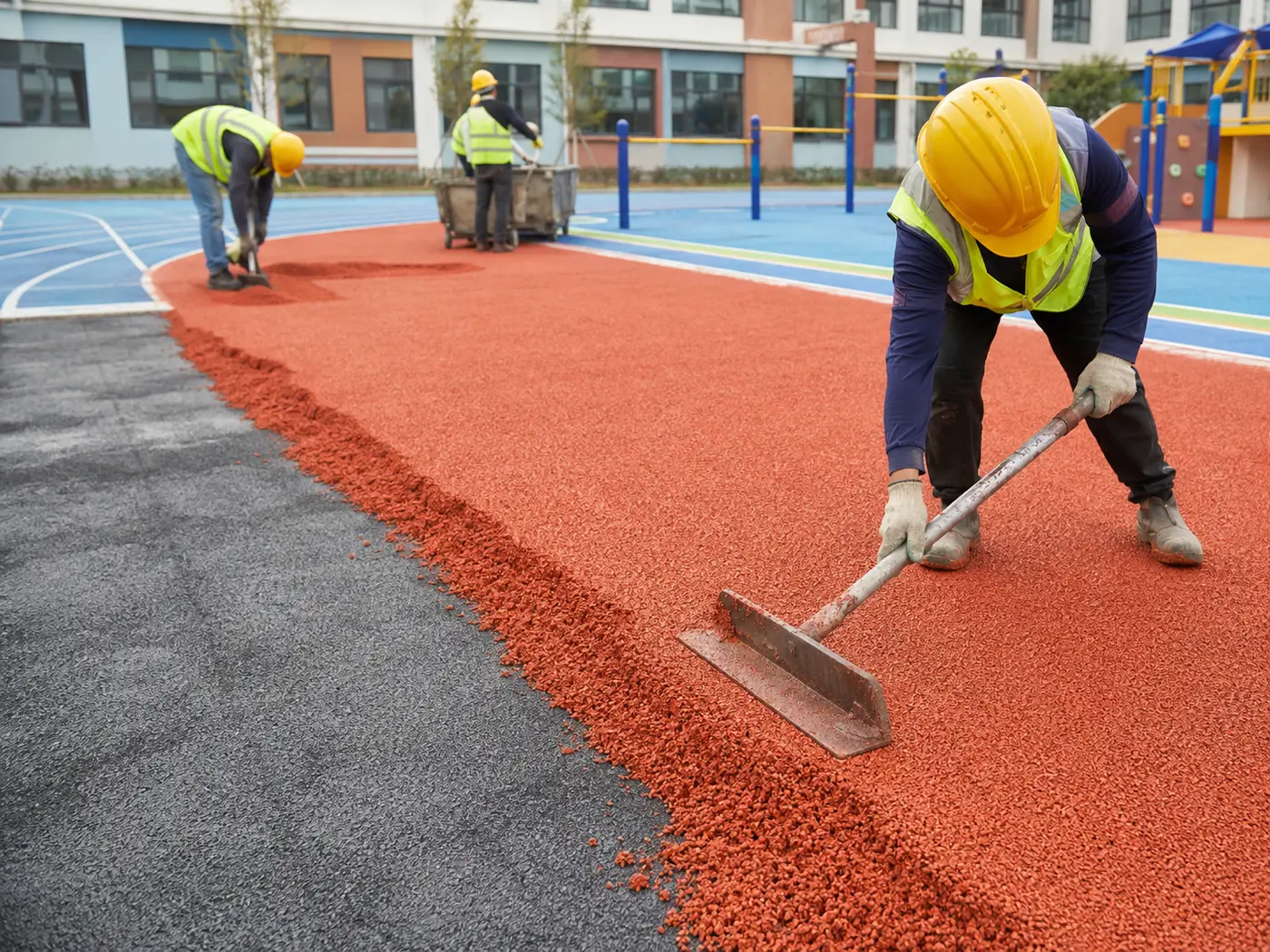
Professional installation of colored EPDM wet-pour sports and playground flooring

International EPDM procurement checklist

Item to confirmWhy it mattersEvidence to request
Application and surface systemDifferent uses require different system decisions and performance criteria.Specification, drawing, bill of quantities or written scope.
Product identity and compositionCommercial names alone do not prove equivalence.Quotation description and current technical data.
Particle-size rangeGranulation affects texture, coverage, mixing and availability.Labeled sample and matching product documents.
Color or blendColors can change cost, minimum quantity and batch planning.Signed physical sample or identified chart reference.
Net quantityVolume changes production planning, packaging and freight.Installer calculation plus waste allowance.
PackingBag weight, pallets and container loading affect handling and cost.Packing statement with net and gross quantities.
Destination and IncotermEXW, FOB, CFR and CIF allocate costs and responsibilities differently.Named place or port and agreed Incoterms edition.
Required documentsConsultants, customs and payment providers may require different records.Approved document schedule before production.
Delivery programOne shipment and phased delivery have different batch and stock risks.Required dates and acceptable shipment splits.
Quality evaluation

How professional buyers review an EPDM granules supplier

Quality is easier to manage when every claim is connected to an identified product, defined requirement and appropriate evidence.

Granulation and cleanliness

Review whether the sample has the agreed size distribution and appears free from unintended contamination. Visual inspection is useful, but acceptance criteria should come from the agreed technical specification and test method. Ask how the factory controls screening, fines and batch identification.

Color consistency

Confirm how the color is named, sampled and traced to production. Long projects need a batch strategy. Installers should follow an agreed mixing or sequencing method to reduce visible transitions, and receiving teams should keep labels until work and inspection are complete.

Relevant documentation

Request the documents the project actually needs, which may include technical data, safety data, test reports or declarations when available and applicable. Check the issuing organization, date, method, units, product identity and whether the evidence relates to the material being offered.

Words such as premium, UV stable, weather resistant, non-toxic, sustainable or child safe should not be treated as complete technical conclusions. They become useful when tied to a defined test, limit, composition or surface system. For example, the finished safety performance of a playground involves the resilient layers, thickness, substrate, workmanship and test conditions. The project consultant should define which requirements are evaluated at product level and which are evaluated at system level.

Samples serve several purposes. A color chip helps the architect evaluate appearance. A small granule bag lets the installer review texture and make a trial. A mock-up helps stakeholders approve workmanship, pattern edges and the complete surface. None of these alone proves every long-term property. Define the purpose of each sample and keep an approval record.

Traceability is valuable during receiving, installation and later repair. Purchase documents should use consistent product descriptions. Bags or pallets should be identifiable by color and batch where applicable. If a container carries multiple colors or projects, the packing list and loading plan should allow the receiver to separate them correctly. Photographing cargo before dispatch can support the shipment record, but it does not replace inspection or contract documents.

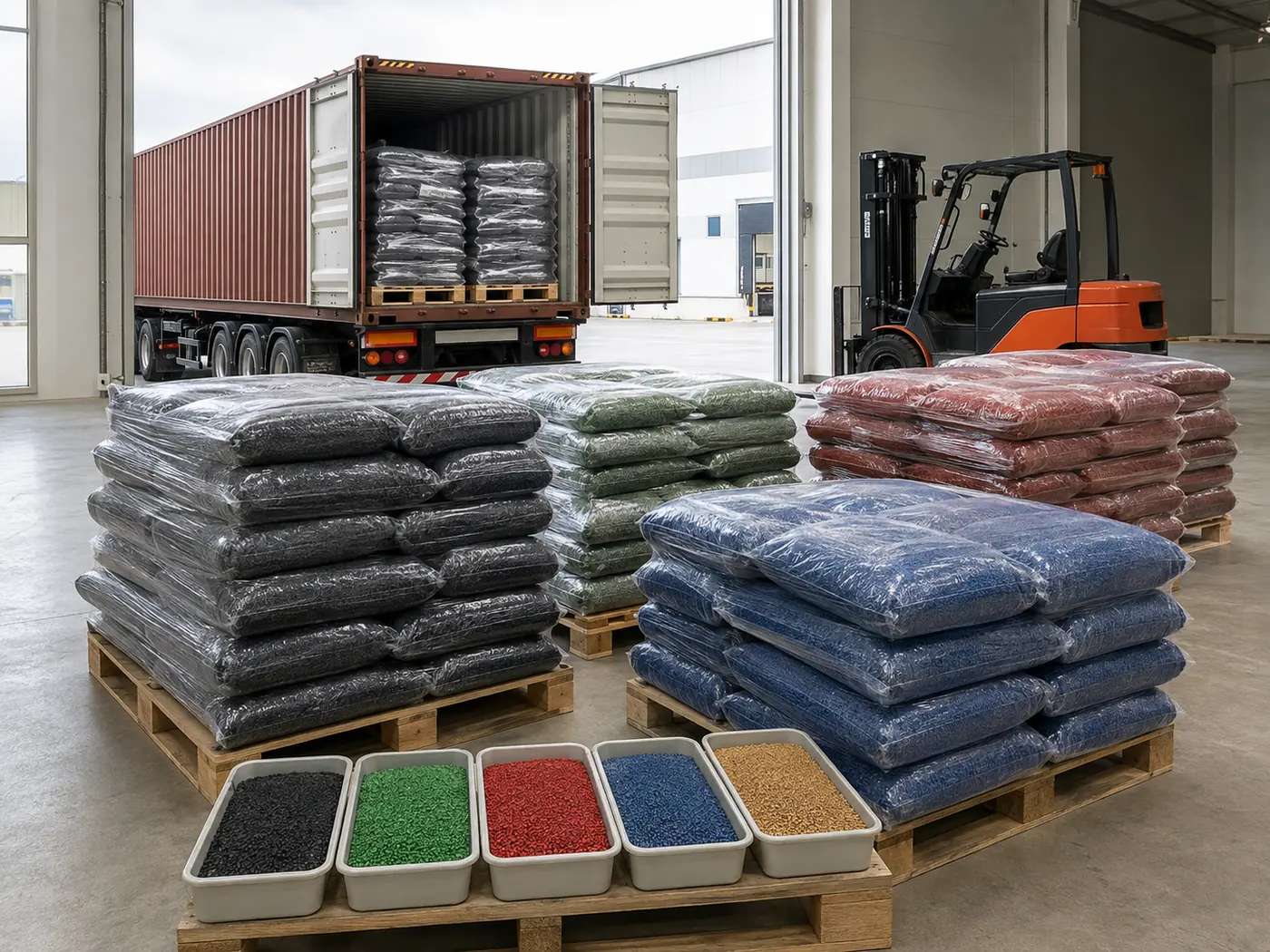
Pallets and export packing for bulk colored EPDM rubber granules
Complete surface thinking

EPDM granules are one component of the finished flooring

The finished surface begins with a stable, suitable substrate. Outdoor bases need correct levels and drainage. Weak areas, contamination, cracks or trapped moisture can affect later layers. The contractor should inspect the base and record acceptance before surfacing begins.

A typical wet-pour concept may use a shock-absorbing base layer and a colored EPDM wear layer. This general description is educational, not a universal construction detail. Materials and thicknesses vary according to use, design and required performance. Follow the approved system provider’s method statement and project requirements.

Site teams must control weighing, mixing, pot life, temperature, humidity, substrate moisture, compaction, joints and curing protection. Inconsistent ratios between mixes may create texture and color differences. Rain, dew, dust or early traffic can damage fresh work. Establish inspection points and weather criteria before starting.

A representative mock-up aligns the owner, consultant and installer. Record the material batch, binder, ratio, thickness and method used in the approved area. For complex graphics or multi-color designs, prepare a color schedule, calculated quantities and installation sequence. Small color islands can create disproportionate waste and labor if they are not planned.

Handover should include cleaning and repair guidance. Avoid harsh maintenance practices that could damage the surface. Store any approved spare granules in sealed, labeled conditions according to manufacturer guidance. Future repairs may still show because the existing surface has weathered, so repair boundaries and expectations should be agreed.

Worldwide export

Packing and shipping EPDM granules to international markets

A complete export offer explains how the order moves from confirmed specification to packed, documented and dispatched cargo.

Define the shipment

Confirm the net quantity, nominal bag weight, number of bags, pallet arrangement if applicable, gross weight and approximate volume. The container plan must respect payload and handling limitations. Ask whether the quotation includes pallets, wrapping, labels and loading. Packing should keep material clean and protected from avoidable weather exposure during normal transport and handling.

Name the delivery term precisely

Write the chosen Incoterm with the named place or port and agreed edition. “CIF Africa” is not precise enough because freight to one African port may differ greatly from another. EXW, FOB, CFR and CIF include different commercial scopes and risk-transfer points. Buyers should confirm responsibility for origin handling, freight, insurance, customs clearance, duties, destination charges, unloading and inland delivery.

Agree documents before production

Commercial documents may include a proforma invoice, commercial invoice, packing list, transport document and certificate of origin where required. The buyer, destination authorities, bank or consultant may request other records. Technical and safety files should be identified separately from customs documents. A document schedule agreed before production reduces urgent changes near dispatch.

Coordinate production and transit dates

Production lead time and carrier transit time are not the same. The quotation should state its production assumption, while shipping estimates remain subject to vessel schedules, routing and port conditions. Project planners should include time for approval, payment, production, booking, export handling, transit, clearance and inland delivery. Critical installation windows need contingency.

Inspect receiving and storage

At destination, check container or vehicle condition, package count, visible damage, labels and documents before distributing material to work fronts. Record discrepancies promptly. Store bags sealed, dry, clean, identified and protected according to current manufacturer instructions. Keep different colors and batches clearly separated.

Al-Shiekh Trade & Export supports the international commercial route and export communication. Buyers may contact the export team with their destination, quantity and trade terms. For direct technical factory questions, the Sport Floor WhatsApp link connects the enquiry to the principal manufacturing source. Separating these two contact paths improves clarity: one route focuses on export coordination, while the other focuses on factory product information.

Global targeting does not mean making identical promises for every country. Import procedures, shipping routes, required documents and local standards vary. The final offer must therefore be destination-specific. Projects in the Gulf may emphasize intense heat and fast construction schedules; African destinations may require careful port and inland-logistics planning; European buyers may request a detailed compliance file; island markets may face limited sailing schedules. These are planning considerations, not reasons to assume one region always has the same requirements.

Commercial quotation

What determines EPDM granules price for a bulk export order?

No responsible supplier can publish one universal price for every EPDM granules enquiry. The final quotation may change according to formulation, particle size, color, total quantity, number of colors, packing, production schedule, document requirements, payment terms, freight conditions, destination and Incoterm. Standard and special colors may not have the same cost. A trial order and a full container also have different unit economics.

Compare quotations on an equal basis. Verify that each seller is offering the same product description, net quantity, granule size, color, packing and delivery term. Check currency, quotation validity and whether tax, pallets, origin charges, freight, insurance or inspection are included. A lower EXW figure cannot be compared directly with a CIF price unless the excluded transport and handling costs are normalized.

Price per kilogram can help with internal calculations, while export transactions are often planned by metric ton, bag, pallet or container. Do not calculate a full surface cost from granule price alone. The installed system may include a base layer, binder, primer, substrate work, labor, equipment, freight, customs, waste, testing, line marking and maintenance. The correct comparison is total landed material cost or total installed system cost, depending on the decision being made.

Product factors

Composition, particle size, color family, custom blend, batch plan and documentation.

Order factors

Quantity, color split, packing, schedule, inspection, payment and shipment phasing.

Logistics factors

Origin, destination, trade term, freight, container loading and import responsibilities.

A strong request for quotation might read: “Please quote colored EPDM rubber granules for a wet-pour playground project. Required size: [range]. Colors and quantities: [list]. Total net quantity: [tons]. Packing: [requirement]. Destination: [port and country]. Incoterm: [rule and named place]. Required documents: [list]. Target delivery: [date].” Attach the specification and bill of quantities when available.

Ask the supplier to list assumptions and exclusions. If the order is subject to consultant approval, say so. If the buyer needs a sample or color chart before purchase, include that step in the schedule. If a bank or customs broker has document requirements, confirm them before the final proforma invoice. Clear information at the beginning produces a more reliable comparison and reduces later revisions.

Supplier due diligence

How to select an EPDM granules manufacturer or exporter

Look for accurate information instead of exaggerated claims

A professional seller should identify what is included, what is optional and what needs confirmation. Statements such as “best quality,” “lowest price” or “suitable for every project” do not replace a specification. Precise limitations are often useful because they show the supplier understands that products, countries and surface systems have different requirements.

Understand the relationship between exporter and manufacturer

When the commercial route includes an export company and a factory, buyers should know who provides technical data, who produces the material, who issues the quotation, who manages shipping and who receives claims. This page clearly presents Al-Shiekh Trade & Export as the export communication route and Sport Floor as the principal factory contact for the linked sports-flooring product information.

Match evidence to the offered product

A test report for a different formulation, size or product cannot automatically prove the offered shipment meets the same result. Review the sample identity, test method, issuing laboratory, date and product reference. Ask the project consultant which evidence is acceptable. Avoid collecting certificates only for appearance; build a document schedule connected to actual contract requirements.

Evaluate communication before placing the order

The enquiry stage shows how clearly a supplier handles details. Notice whether questions receive direct answers, changes are confirmed in writing and documents use consistent descriptions. International orders involve factory, export, carrier, customs and site teams. Clear written records reduce the risk created by time zones, language differences and multiple handovers.

Consider total risk, not only the lowest price

An inexpensive offer can become costly if the material is unsuitable, batch colors vary, packing is damaged, documents are incomplete or replacement stock misses the installation window. Compare total landed cost, approval risk and schedule consequences. For major projects, establish receiving inspection and a practical contingency plan.

Use a controlled purchase sequence

A recommended sequence is enquiry, specification clarification, preliminary quotation, sample and document review, project approval, final commercial offer, purchase order, production confirmation, pre-shipment document check, dispatch, receiving inspection and installation records. The level of control can be proportional to the order, but large or safety-related projects should not skip approval steps merely to start production faster.

The purpose of this page is to make that procurement path easier for a global buyer. It supplies clear definitions, practical questions and direct contact options. It does not replace professional surface design, laboratory evaluation, local regulatory review, a signed supply contract or an approved installation method.

Buyer questions

Frequently asked questions about EPDM granules supply and export

What are colored EPDM rubber granules?

They are colored particles made from an EPDM rubber formulation and used in resilient surfacing. In wet-pour systems they are commonly mixed with a suitable polyurethane binder to create the visible wear layer. The exact formulation, particle range and intended system should be confirmed with the supplier.

What are EPDM granules used for?

Common applications include wet-pour playground flooring, running or jogging surfaces, recreational areas, landscape activity zones and selected sports surfaces. Suitability depends on the complete construction system, substrate, environment and project requirements.

Are EPDM and SBR granules the same?

No. EPDM and SBR refer to different rubber families. In a common playground concept, SBR may be used in a resilient base and colored EPDM in the wear layer. The approved system determines the actual materials and thicknesses.

Which EPDM particle size should I order?

Use the particle range stated in the approved project or system specification. Size affects texture, application and coverage. Send the specification to the supplier and confirm the same range on the quotation, sample and product documents.

Can buyers request a color chart or sample?

Samples and color references may be requested subject to availability and commercial arrangements. Use a physical labeled sample for final approval because photographs and screens can alter color appearance.

Can custom colors or blends be supplied?

Custom colors or blends may be possible depending on production capability, quantity and lead time. State the color reference and required quantity. Approve a sample and document the blend proportions and batch plan.

What is the minimum order quantity?

Minimum order quantities depend on the offered product, color, production plan and packing. A custom color may require a different minimum from a standard color. Ask for confirmation in the current quotation.

How much EPDM is needed per square metre?

Consumption depends on layer thickness, granule range, compaction, system design and waste. The installer or system provider should calculate the requirement. Do not use a generic online figure as the final purchase quantity.

Can EPDM granules be exported worldwide?

International supply can be arranged subject to product availability, destination requirements, quantity, shipping route and agreed commercial terms. Send the destination port and requested Incoterm for review.

Are FOB and CIF quotations available?

The available trade terms must be confirmed for each destination and shipment. State the named port or place. Buyers should understand which costs and responsibilities are included under the selected rule.

What documents should an importer request?

Commercial documents may include invoice, packing list, transport document and origin records where applicable. Technical requirements may include data sheets, safety information or test evidence. Confirm the exact schedule before ordering.

How should EPDM bags be stored?

Keep packages sealed, dry, clean, identified and protected from weather and contamination according to current manufacturer instructions. Separate colors and batches and retain labels through installation and inspection.

Do EPDM granules alone guarantee playground safety?

No. Playground safety performance is associated with the complete designed and installed surface, including base, thickness, binder, workmanship and testing. Follow the project’s applicable requirements.

Who should I contact for a quotation?

Contact Sport Floor for direct factory and technical product communication. Contact Al-Shiekh Trade & Export for international sourcing, shipping and export coordination. Both WhatsApp routes are provided below.

Ready for a commercial enquiry?

Request samples, specifications and a bulk export quotation

Send the application, size, color, quantity, destination port, preferred Incoterm and required documents. Choose direct factory communication or export support.

Al-Shiekh Trade & Export

International sourcing and export coordination for sports flooring materials.

Buyer notice: specifications, availability, evidence, packing, lead time and trade terms must be confirmed in the final quotation and purchase documents. Incoterms® is a trademark of the International Chamber of Commerce.

© 2026 Al-Shiekh Trade & Export

Scroll to Top